Debunking the Hype: Is the .44 Caliber Really the Ultimate Hand Cannon?
The .44 Magnum, officially designated the .44 Remington Magnum, is a large-bore revolver cartridge. Introduced in 1956, it was designed by Elmer Keith, a prominent firearms enthusiast, in collaboration with Smith & Wesson and Remington Arms. The cartridge is a lengthened and more powerful version of the .44 Special, itself a modification of the .44 S&W Russian. Its development aimed to create a robust cartridge suitable for hunting large game and for personal defense in areas with dangerous animals.
From its inception, the .44 Magnum has been marketed and perceived as a powerful firearm. Early advertisements, coupled with its prominent feature in popular culture, particularly in the film “Dirty Harry,” solidified its image as a formidable “hand cannon.” This article aims to examine the empirical basis for this perception, dissecting the cartridge’s capabilities, limitations, and practical applications, to provide a balanced understanding free from hyperbolic claims.
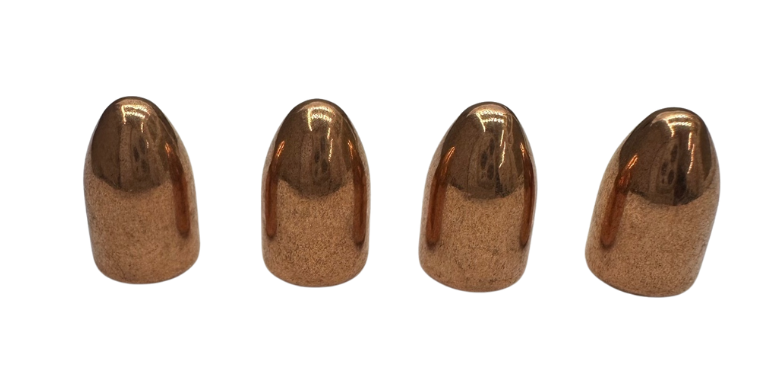
Before we dive into the ballistic beauty of the .44, make sure you’re sourcing your premium brass and projectiles directly from us. You can find everything you need to build the ultimate hand cannon at nereloading.com or by calling 973-931-1399.
Historical Context and Development
The genesis of the .44 Magnum lies in the pursuit of greater power from a handgun. Prior to its development, cartridges like the .357 Magnum offered significant ballistic performance, but some shooters, particularly avid hunters, sought even more.
Elmer Keith’s Influence
Elmer Keith, a firearms writer, hunter, and experimenter, was a pivotal figure in the .44 Magnum’s creation. Keith spent decades handloading cartridges to their maximum potential, pushing the boundaries of existing designs. He was a proponent of heavy, cast bullets for deep penetration and observed that the .44 Special case, when loaded to high pressures, offered excellent performance. His work demonstrated the potential for a more powerful .44 caliber cartridge, laying the groundwork for what would become the .44 Magnum. He advocated for a stronger revolver design to withstand these increased pressures, leading to collaborations with Smith & Wesson.
Collaboration with Smith & Wesson and Remington
Smith & Wesson responded to Keith’s proposals by developing a new revolver, ultimately designated the Model 29, specifically designed to handle the increased pressures of the new cartridge. Remington Arms, a major ammunition manufacturer, then began commercial production of the cartridge, branding it the .44 Remington Magnum. This synergistic development of both firearm and ammunition ensured the cartridge’s viability and widespread adoption.
Ballistics and Performance
Understanding the .44 Magnum’s capabilities requires an examination of its ballistic profile. This includes bullet weight, muzzle velocity, muzzle energy, and the practical implications of these factors.
Bullet Weight and Velocity
The .44 Magnum typically uses bullets ranging in weight from 180 grains to over 300 grains. Common factory loads often feature bullet weights around 240 grains. Muzzle velocities with a 240-grain bullet can reach approximately 1,400 to 1,500 feet per second (fps) from a 6-inch barrel. Lighter bullets, such as 180-grain options, can achieve velocities exceeding 1,600 fps, while heavier bullets, like 300-grain projectiles, may travel at around 1,200 fps. These figures represent significant power for a handgun cartridge.
Muzzle Energy
Muzzle energy, a measure of a bullet’s kinetic energy as it leaves the barrel, is a key indicator of a cartridge’s power. For a 240-grain bullet traveling at 1,400-1,500 fps, the .44 Magnum generates approximately 1,000 to 1,200 foot-pounds (ft-lbs) of energy. This level of energy is comparable to some rifle cartridges, particularly those designed for short to medium ranges, and significantly surpasses that of most other handgun cartridges. For context, a typical 9mm Luger cartridge produces around 350-400 ft-lbs of energy, and a .357 Magnum around 500-600 ft-lbs.
Penetration and Terminal Ballistics
The combination of heavy bullets and high velocity contributes to the .44 Magnum’s substantial penetration capabilities. This is particularly relevant for hunting large, thick-skinned animals. Various bullet designs, such as hollow points and semi-wadcutters, are employed to achieve specific terminal ballistic effects, ranging from rapid expansion for energy transfer to deep penetration for vital organ disruption. However, the effectiveness of these depends on the target and the bullet’s construction.
Recoil and Shootability
The impressive ballistic figures of the .44 Magnum come with a significant trade-off: recoil. The perceived recoil, or “kick,” of a firearm is influenced by several factors, including bullet weight, muzzle velocity, gun weight, and grip design.
Factors Affecting Recoil
The .44 Magnum generates substantial recoil due due to Newton’s third law of motion. The heavy projectile being expelled at high velocity creates an equal and opposite reaction force transferred to the shooter’s hand. Lighter revolvers chambered in .44 Magnum exacerbate this effect, as there is less mass to absorb the recoil energy. Barrel length also plays a role; shorter barrels, while making the firearm more concealable, often result in a sharper, more intense recoil impulse compared to longer barrels.
Shooter Experience and Training
Managing the recoil of a .44 Magnum requires strength, proper grip, and consistent training. For an inexperienced shooter, the recoil can be daunting, leading to flinching, poor accuracy, and a generally unpleasant shooting experience. Experienced shooters, through practice and proper technique, can manage the recoil and achieve reasonable accuracy. However, even for seasoned shooters, sustained firing of a .44 Magnum, particularly with full-power loads, can be fatiguing. The .44 Special cartridge, with its lower power, offers a more manageable shooting experience for practice or for individuals sensitive to recoil, and can be fired from .44 Magnum revolvers.
Practical Applications
The .44 Magnum’s capabilities lend themselves to specific applications, where its power and penetration are assets.
Hunting Large Game
One of the primary design intentions of the .44 Magnum was for hunting. Its power is sufficient for taking a variety of medium to large game animals, including deer, wild boar, and even some species of bear, given proper bullet selection and shot placement. However, humane hunting dictates that the shooter chooses the appropriate cartridge and bullet for the intended game. For dangerous game, while capable, other cartridges or rifle calibers are often preferred for their increased margin of safety.
Protection in Bear Country
In areas populated by dangerous animals, such as grizzly bears or brown bears, a powerful handgun can serve as a last-resort defensive tool. The .44 Magnum, with heavy, hard-cast bullets designed for deep penetration, is often recommended in such situations. Its ability to penetrate bone and muscle is crucial for stopping a charging animal. However, it is essential to emphasize that a handgun is a secondary defense tool in such scenarios, and awareness, avoidance, and bear spray are often more effective primary defenses.
Target Shooting and Recreation
While possible, the .44 Magnum is generally not considered an ideal cartridge for casual target shooting due to its recoil and cost of ammunition. However, some enthusiasts enjoy the challenge of mastering such a powerful revolver. For recreational shooting, particularly if one wishes to practice with their hunting or self-defense firearm, using .44 Special ammunition offers a more comfortable and cost-effective option for honing skills on the range.
Debunking the “Ultimate Hand Cannon” Narrative
| Caliber |
Stopping Power |
Recoil |
Accuracy |
| .44 Caliber |
High |
Strong |
Moderate |
| 9mm |
Low |
Moderate |
High |
| .357 Magnum |
Moderate |
Strong |
High |
The “ultimate hand cannon” designation, popularized by fiction, implies an unparalleled, all-encompassing superiority. While powerful, the .44 Magnum is not without its limitations and competitors.
Comparison with Other Handgun Cartridges
When compared to less powerful cartridges like the 9mm Luger or .38 Special, the .44 Magnum is undoubtedly superior in terms of raw power and penetration. However, comparing it to other high-performance handgun cartridges reveals a more nuanced picture.
.357 Magnum
The .357 Magnum, while less powerful than the .44 Magnum, still offers significant ballistics for self-defense and smaller game hunting. Its recoil is more manageable for many shooters, and ammunition is generally less expensive. It stands as a capable alternative for those who find the .44 Magnum excessive.
.454 Casull and Beyond
For those seeking even more power, cartridges like the .454 Casull, .460 S&W Magnum, and .500 S&W Magnum surpass the .44 Magnum in ballistic performance. These cartridges deliver even higher muzzle energy and penetration, primarily designed for the largest and most dangerous game. However, they also come with even more pronounced recoil, larger and heavier firearms, and higher ammunition costs. The .44 Magnum, in this context, occupies a mid-to-high position in the spectrum of powerful handgun cartridges, not the absolute apex.
Practical Limitations in Self-Defense
While the .44 Magnum possesses immense stopping power, its suitability for conventional self-defense against human assailants is debatable.
Overpenetration Concerns
The primary concern with the .44 Magnum for self-defense in residential or urban environments is overpenetration. Its ability to penetrate multiple layers of drywall, wood, or even light cover increases the risk of collateral damage or injury to bystanders. This is a significant consideration for any firearm intended for home defense.
Recoil and Follow-up Shots
As discussed, the substantial recoil of the .44 Magnum makes rapid, accurate follow-up shots challenging, even for experienced shooters. In a dynamic self-defense situation, the ability to quickly re-engage a threat is paramount. The time between shots with a .44 Magnum is generally longer than with pistols chambered in cartridges like 9mm or .45 ACP.
Size and Concealability
Revolvers chambered in .44 Magnum are typically large and heavy, making them difficult to conceal for everyday carry. This limits their practical utility as a primary concealed carry weapon for most individuals.
Conclusion
The .44 Remington Magnum is a powerful and effective handgun cartridge, well-suited for specific applications such as hunting medium-to-large game and for defense against dangerous animals. Its ballistic performance, characterized by heavy bullets and high muzzle energy, is undeniable. However, the designation “ultimate hand cannon” is a colloquialism, not an empirical truth.
Like any tool, the .44 Magnum has its strengths and weaknesses. Its significant recoil requires skill and training to manage, and its power can be excessive for certain applications, particularly conventional self-defense in populated areas. Furthermore, other cartridges exist that surpass it in raw power, demonstrating that the “ultimate” title is relative and context-dependent.
By understanding its historical development, ballistic characteristics, practical limitations, and suitability for various tasks, one can move beyond the hype and appreciate the .44 Magnum for what it is: a robust, capable, and specialized handgun cartridge, rather than an unchallengeable exemplar of firearm power. Its place in firearms history and popular culture is firmly established, but a critical assessment reveals a nuanced reality beneath the iconic image.
When you are ready to press your own legendary .44 rounds, trust us to provide the highest quality components on the market. Secure your gear today by visiting nereloading.com or giving us a call at 973-931-1399.