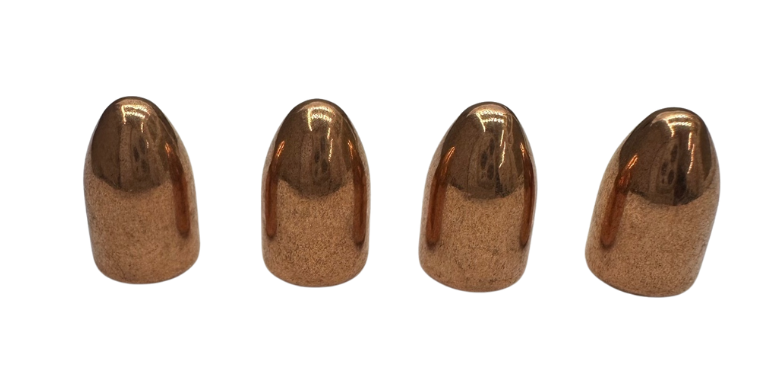
To reload 357 Magnum you need four things: clean cases, the right bullets, a set of dies, and current published load data. 357 is a powerful revolver cartridge with a strong reputation for both self defense and handgun hunting. Below is the plain English rundown of the components, what to look for, and the exact items we stock so you can build accurate 357 Magnum ammunition at home.
This guide walks through everything that goes into a loaded round of 357 Magnum, in the order you would actually work through it. We cover brass, bullets, dies and the basic process, then list the 357 Magnum components you can order from us.
What goes into a reloaded 357 Magnum cartridge
A finished cartridge is four parts working together: the brass case that holds everything, the primer that lights the charge, the powder that drives the bullet, and the bullet itself. When you reload 357 Magnum, you reuse the case, fit a fresh primer, add a measured powder charge, and seat a new bullet. Always build your loads from current published load data supplied by the powder and bullet makers, start at the low end, and work up while watching for pressure signs. This article is general education, not a load recipe.
Choosing brass and bullets for 357 Magnum
Start with quality brass. Sorted once fired 357 Magnum brass gives you most of the savings of reloading while shooting just as well as new for most uses. Inspect each case for cracks and loose primer pockets, and confirm it is Boxer primed so it can be reloaded. For bullets, match the weight and type to your goal, lighter and faster for target and varmints, heavier and tougher for larger game. We carry a range of 357 Magnum projectiles to cover both.
The dies and gear you need for 357 Magnum
A 357 Magnum die set resizes the fired case, seats the new bullet, and applies any crimp. Add a scale, a way to clean your brass, and a reliable load manual and you have everything to get started. Buy the die set once and it lasts for years of reloading.
The 357 Magnum components we carry
You can source the parts for this round directly from us. Every item ships from our shop, and our brass is sorted and inspected before it goes out.
So what do you need to reload 357 Magnum?
Clean Boxer primed 357 Magnum brass, bullets matched to your purpose, a 357 Magnum die set, and published load data. Get those four right, work up your load carefully, and you can produce 357 Magnum ammunition that is more accurate and far cheaper than factory.
The reloading process in plain steps
If you are new to this, the order of operations is simple once you see it. Inspect and clean your brass, resize each case and remove the spent primer, seat a fresh primer, drop a measured powder charge, seat the new bullet to the correct depth, and apply a crimp if your load calls for one. Each step has its own tool, and after a few sessions the rhythm becomes second nature. The single most important habit is to measure every powder charge and never rush.
What to watch out for
Watch for split necks, loose primer pockets, and any charge that does not match your data. Keep your work area clear, label everything, and never let a distraction interrupt the powder step. The reloaders who get the best results are simply the ones who are the most consistent.
Build your next batch
Everything you need to load this round is a click away, and our team has been doing this since 2012. We focus on clean, accurately sorted brass and quality projectiles so your handloads start with good parts. Reach out anytime if you want help choosing the right components for your setup.
Frequently asked questions
Is it cheaper to reload 357 Magnum than buy it?
For most shooters yes, especially once you reuse your 357 Magnum brass several times. The brass is the costly part, so loading it more than once is where the savings come from.
What brass is best for 357 Magnum?
Clean, sorted, once fired 357 Magnum brass from a trusted source is ideal for general use. Inspect each case and confirm it is Boxer primed.
What bullet should I use for 357 Magnum?
Match the bullet to your goal. Lighter bullets suit target and varmint work, heavier bonded or soft point bullets suit larger game.
Do I need special dies for 357 Magnum?
Yes, a 357 Magnum specific die set. It resizes the case, seats the bullet and crimps if needed.
Is reloaded 357 Magnum safe?
It is when you follow published load data, inspect your brass, and work up carefully. Always build your loads from current published load data supplied by the powder and bullet makers, start at the low end, and work up while watching for pressure signs. This article is general education, not a load recipe.
Keep reading and shopping