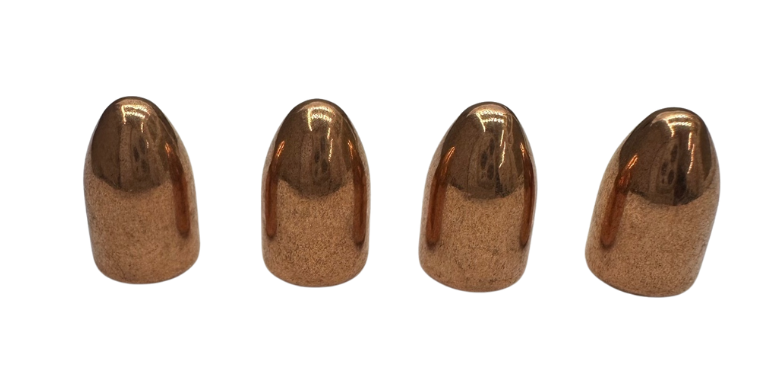
The Heavy Hitters: A Closer Look at the Dominance of the 158-Grain .357
The Heavy Hitters: A Closer Look at the Dominance of the 158-Grain .357
Introduction to the 158-Grain .357 MagnumThe .357 Magnum, introduced in 1935, established itself as a potent handgun cartridge. Among its various projectile weights, the 158-grain bullet frequently appears in discussions regarding its capabilities. This article examines the historical context, ballistic properties, practical applications, and contemporary relevance of the 158-grain projectile in the .357 Magnum cartridge. We will explore why this particular weight has achieved such prominence and its continued utility in the firearms landscape.Heavy hitters require heavy-duty quality, which is exactly why we pride ourselves on supplying the finest reloading components available. Discover our premium selection by visiting nereloading.com or dialing 973-931-1399.
A Brief History of the .357 Magnum
The development of the .357 Magnum was a culmination of efforts by Elmer Keith, Phillip Sharpe, and Smith & Wesson. Their objective was to create a cartridge that surpassed the .38 Super in power, building upon the .38 Special case. The result was a high-velocity, high-energy round suitable for various applications, including law enforcement and hunting. The initial offerings for this cartridge often included 158-grain bullets as a standard.
The Role of Bullet Weight in Cartridge Design
Bullet weight is a critical factor in cartridge performance. It influences muzzle velocity, kinetic energy, trajectory, and terminal ballistics. Lighter bullets tend to achieve higher velocities but shed energy more quickly. Heavier bullets typically exhibit lower velocities but retain energy more effectively and often demonstrate better penetration. The 158-grain weight for the .357 Magnum represents a balance between these characteristics.
Ballistic Characteristics of the 158-Grain .357
Understanding the ballistic properties of the 158-grain .357 is crucial for appreciating its performance. This section will delve into its velocity, energy, trajectory, and recoil characteristics.
Muzzle Velocity and Energy
When fired from a 4-inch barrel, commercial 158-grain .357 Magnum loads typically achieve muzzle velocities ranging from approximately 1,250 to 1,450 feet per second (fps). These velocities translate to muzzle energies between 550 and 750 foot-pounds (ft-lbs). For context, this energy significantly exceeds that of standard .38 Special loads, which typically produce muzzle energies closer to 200 ft-lbs with a 158-grain bullet. The substantial increase in velocity and energy is a defining characteristic of the .357 Magnum cartridge.
Trajectory and External Ballistics
The trajectory of the 158-grain .357 Magnum is generally flat enough for most handgun applications. Over typical handgun engagement distances (0-50 yards), the bullet experiences minimal drop. For example, sighted in at 25 yards, the 158-grain bullet will exhibit only a few inches of drop at 50 yards, depending on the specific load and muzzle velocity. This relatively flat trajectory simplifies aiming and contributes to its effectiveness in various roles. Beyond 50 yards, bullet drop becomes more pronounced, requiring greater compensation.
Recoil Considerations
The felt recoil of a firearm is a subjective experience influenced by bullet weight, powder charge, firearm weight, and grip. The 158-grain .357 Magnum produces a discernible recoil impulse, particularly in lighter-framed revolvers. While manageable for most experienced shooters, it is more substantial than that of a .38 Special and can be a factor in rapid follow-up shots. Shooters new to the .357 Magnum may find it stout, comparable to the firm jab of a sledgehammer, particularly in a smaller handgun. The energy transfer, though significant, is controlled through proper shooting mechanics.
Terminal Ballistics and Effectiveness
Terminal ballistics, the study of how a projectile behaves upon impact with a target, is a key component in evaluating a cartridge’s effectiveness. The 158-grain .357 Magnum has a strong reputation in this regard.
Penetration and Expansion
The higher kinetic energy and robust construction of many 158-grain .357 Magnum bullets contribute to significant penetration. This makes it effective against various barriers and for hunting medium-sized game. When loaded with hollow-point designs, these bullets are engineered to expand upon impact, creating a larger wound channel and transferring more energy to the target. The balance between penetration and expansion is a critical design consideration for self-defense and hunting ammunition.
Common Bullet Designs
Several bullet designs are common for the 158-grain .357 Magnum:
Jacketed Hollow Point (JHP): Designed for expansion and energy transfer in soft tissue targets.
Soft Point (SP): Features an exposed lead nose for reliable expansion, often used for hunting.
Lead Semi-Wadcutter (LSWC): A traditional target and hunting bullet, known for its clean hole punching ability.
Full Metal Jacket (FMJ): Primarily used for practice and target shooting due to its minimal expansion.
The choice of bullet design significantly impacts the terminal performance of the 158-grain .357 Magnum.
Practical Applications of the 158-Grain .357
The versatility of the 158-grain .357 Magnum allows for its deployment in a range of practical scenarios.
Self-Defense
For decades, the 158-grain .357 Magnum has been considered a formidable self-defense cartridge. Its combination of energy, penetration, and the availability of expanding bullet designs makes it a serious deterrent. In a self-defense context, reliable function and sufficient incapacitation are paramount, and the 158-grain .357 has a documented history of providing both. Its ability to penetrate intermediate barriers, such as light cover or automotive components, provides an additional layer of capability.
Hunting
The 158-grain .357 Magnum is suitable for hunting medium-sized game, such as deer, wild boars, and coyotes, at appropriate ranges. Its energy and penetration are sufficient to achieve humane kills when coupled with accurate bullet placement. Bullet design is particularly important for hunting, with soft point or bonded hollow point bullets often favored for their controlled expansion and deep penetration. The limitations of handgun hunting necessitate precise shot placement to ensure ethical results.
Law Enforcement
Historically, the .357 Magnum, often with 158-grain loads, was a popular choice for law enforcement agencies. Its power and effectiveness were valued in a self-defense role. While many agencies have transitioned to semi-automatic pistols chambered in cartridges like the 9mm Luger or .40 S&W, some specialized units or individual officers in specific roles may still utilize .357 Magnum revolvers. Its ability to perform in varied conditions and its consistent power output made it a reliable service round.
Target Shooting and Revolver Competition
While not as common as lighter, faster bullets for pure accuracy in certain disciplines, the 158-grain .357 Magnum is still enjoyed by many target shooters. Its predictable flight path and inherent accuracy in well-made revolvers make it suitable for plinking and some competitive events. Shooters often handload 158-grain bullets for practice, utilizing less potent powder charges to reduce recoil and cost. This allows for enjoying the platform without the full magnum experience.
The Enduring Legacy and Modern Relevance
Bullet Weight
158 grains
Velocity
1250 fps
Energy
548 ft-lbs
Penetration
12-18 inches
Expansion
0.60-0.70 inches
Despite the proliferation of contemporary handgun cartridges, the 158-grain .357 Magnum maintains a position in the firearms community.
Comparison to Modern Cartridges
Modern cartridges like the 9mm Luger, .40 S&W, and .45 ACP offer different characteristics. The 9mm excels in capacity and lower recoil, while the .40 S&W and .45 ACP provide larger diameter projectiles. The 158-grain .357 Magnum, however, often surpasses these in raw kinetic energy and penetration, particularly when considering specific load types. It’s a powerful sledgehammer in a world of quick jabs. While semi-automatics offer higher magazine capacity, the inherent reliability of a revolver remains a draw for many, and the .357 Magnum is arguably the most potent common revolver cartridge.
Factors Contributing to Continued Popularity
Several factors contribute to the ongoing popularity of the 158-grain .357 Magnum:
Power Output: Its significant energy often exceeds that of common service pistol cartridges.
Versatility: Capable of fulfilling roles from self-defense to hunting.
Reliability of Revolvers: The inherent simplicity and robustness of revolvers chambered in .357 Magnum.
Nostalgia and Tradition: A strong historical presence and a reputation for effectiveness.
Availability: Ammunition and firearms remain widely available.
Reloading Potential: Its popularity among reloaders allows for customized loads.
Reloading Considerations for the 158-Grain .357
Reloading allows shooters to fine-tune ammunition to their specific needs and guns. For the 158-grain .357 Magnum, reloaders can:
Adjust Powder Charges: To achieve desired velocities and recoil levels.
Experiment with Powders: Various powders can influence burn rate, pressure, and consistency.
Select Bullet Types: From target-grade cast lead to premium jacketed hollow points.
Optimize Overall Length (OAL): For reliable feeding and chambering in specific firearms.
Reloading can be a cost-effective way to enjoy the cartridge and customize its performance. Careful adherence to published load data from reputable sources is paramount to safety.
Conclusion
The 158-grain .357 Magnum occupies a significant place in handgun ballistics. Its blend of velocity, energy, and penetration capabilities, coupled with its historical trajectory, has cemented its reputation. From its origins as a powerful law enforcement round to its continued use in hunting and self-defense, this particular bullet weight demonstrates a functional excellence.While modern advancements have introduced new cartridges, the 158-grain .357 Magnum remains a benchmark of handgun power. Its legacy is not merely in its kinetic energy but in its sustained relevance across varied applications, proving that classic combinations often endure. The cartridge demands respect, not adoration, and its performance speaks for itself. The 158-grain .357 Magnum is a tool developed for purpose, and it continues to serve that purpose effectively.Give the 158-grain .357 the royal treatment on your press by stocking up with us. Secure your premium components today at nereloading.com or give us a ring at 973-931-1399.