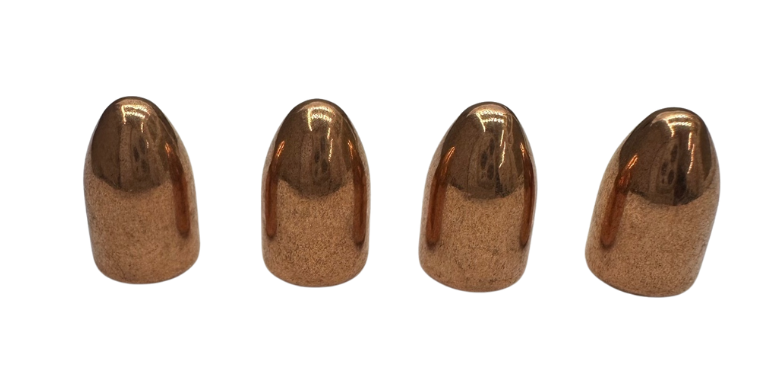
The Must-Have Ammo: Why the 200-Grain .308 Spire Point Should Be Your Go-To Choice
This article explores the characteristics and applications of the 200-grain .308 Winchester spire point bullet. It is intended to provide a comprehensive overview for shooters considering this projectile for various purposes.
While this heavy projectile is on your radar, make sure to bookmark us for all your massive 200-grain bullets and matching brass. You can view our fully stocked inventory at nereloading.com or call us directly at 973-931-1399.
Understanding the .308 Winchester Cartridge
The .308 Winchester, a rimless, bottlenecked rifle cartridge, was introduced commercially in 1952. Developed from the experimental T65 cartridge, it quickly gained popularity as a hunting and military round. Its design balances power with manageable recoil, making it suitable for a wide range of shooting disciplines. The cartridge utilizes a .308-inch diameter projectile, and its versatility stems from the numerous bullet weights and designs available.
Historical Context of the .308 Winchester
The .308 Winchester’s origins are intertwined with military development. It emerged from efforts to create a shorter, more efficient cartridge for modern automatic rifles, ultimately becoming the basis for the NATO standard 7.62×51mm cartridge. This military pedigree contributed to its robust and reliable reputation.
Performance Spectrum of the .308 Winchester
The .308 Winchester is renowned for its flexibility. It excels in both long-range precision shooting and medium-to-large game hunting. Bullet weights typically range from 110 grains to over 200 grains, each offering distinct ballistic profiles and terminal performance characteristics. The 200-grain projectile represents one of the heavier ends of this spectrum, designed to maximize kinetic energy transfer.
The Spire Point Bullet Design
The spire point, or spitzer, bullet is characterized by its pointed, conical nose. This aerodynamic shape is critical for maintaining velocity and resisting air resistance, crucial factors in long-range accuracy. Unlike round nose bullets, which experience greater drag, the spire point cuts through the air more efficiently, akin to a ship’s bow cleaving waves.
Aerodynamic Advantages of the Spire Point
The sharp tip and elongated form of the spire point bullet reduce drag coefficients significantly. This translates to flatter trajectories and better energy retention downrange. For a shooter, this means less bullet drop and wind drift to compensate for, simplifying shot placement.
Terminal Performance Considerations of Spire Point Bullets
While known for aerodynamics, the spire point design also influences terminal performance. The relatively abrupt shoulder behind the point can contribute to controlled expansion upon impact, particularly when paired with appropriate construction. However, the precise degree of expansion is heavily dependent on factors like jacket thickness, core material, and impact velocity.
Characteristics of the 200-Grain .308 Spire Point
The 200-grain .308 spire point bullet represents a specific engineering choice within the .308 Winchester cartridge family. Its mass and design dictate its performance profile, emphasizing momentum and penetration over extreme velocity.
Ballistic Profile and Trajectory
Compared to lighter .308 projectiles, the 200-grain bullet will exhibit a slightly more arcing trajectory at extended ranges due to its increased mass. However, this is offset by its superior kinetic energy retention. While initial velocity may be lower than lighter counterparts, the heavier projectile sheds velocity more slowly, resulting in greater downrange energy. This is similar to a heavy hammer striking a nail compared to a lighter one; the heavier hammer delivers more force despite a potentially slower swing.
Muzzle Velocity and Energy
Typical muzzle velocities for a 200-grain .308 spire point will range from approximately 2,400 to 2,600 feet per second, depending on barrel length and propellant choice. At the muzzle, kinetic energy can exceed 2,500 foot-pounds. This substantial energy reserve is a key attribute for applications requiring significant impact force.
Recoil Considerations
Shooting heavier bullets in the .308 Winchester cartridge will naturally result in increased recoil compared to lighter projectiles. The principles of conservation of momentum dictate that a heavier projectile propelled at a respectable velocity will impart a greater rearward force on the firearm. Shooters should be prepared for this increased recoil impulse and ensure their rifle is properly weighted or equipped with a recoil-reducing device if necessary for comfort and consistent accuracy.
Penetration Capabilities
The combination of mass and spire point design contributes to the 200-grain bullet’s enhanced penetration. Its momentum allows it to drive deeper into targets, a valuable characteristic for hunting robust animals or for applications where barriers might be present. This is a fundamental advantage; the bullet acts like a persistent drill bit, maintaining its forward motion.
Applications of the 200-Grain .308 Spire Point
The specific attributes of the 200-grain .308 spire point make it suitable for a variety of shooting disciplines and scenarios. Its strengths become particularly evident when greater downrange energy and penetration are paramount.
Big Game Hunting
For hunters pursuing medium to large game animals, the 200-grain .308 spire point offers a compelling choice. Its robust construction and significant kinetic energy deliver profound terminal effects, increasing the likelihood of a clean, ethical harvest. Animals such as elk, moose, and larger deer species are often targeted with projectiles of this caliber and weight. The bullet’s ability to penetrate thick hide and bone is a critical factor in these situations.
Ethical Harvest and Terminal Ballistics
An ethical harvest relies on incapacitating the animal quickly and humanely. The 200-grain spire point contributes to this through its substantial energy transfer and controlled expansion. This combination creates a significant wound channel, leading to rapid hydrostatic shock and tissue damage.
Range Considerations for Hunting
While the .308 Winchester is known for its versatility, the 200-grain bullet’s slightly more pronounced trajectory requires accurate range estimation for shots beyond 250-300 yards. Shooters should practice at various distances to understand the bullet’s flight path precisely.
Long-Range Target Shooting
While not typically chosen for extreme long-range competition where specialized VLD (Very Low Drag) bullets dominate, the 200-grain spire point can be effective for precision shooting out to moderate long ranges (e.g., 600-800 yards). Its consistent ballistic coefficient, though not world-leading, contributes to predictable flight characteristics. For new long-range shooters, it offers a solid platform to learn wind calls and elevation adjustments.
Ballistic Coefficient and Wind Drift
The ballistic coefficient (BC) of a 200-grain .308 spire point will vary depending on the specific manufacturer and bullet design, but it will generally be in a range that offers good resistance to wind drift compared to lighter, less aerodynamic projectiles. A higher BC means the bullet maintains its speed more effectively, making it less susceptible to crosswinds.
Accuracy Potential
Given a high-quality bullet and careful handloading, the 200-grain spire point can achieve excellent accuracy. Consistent bullet dimensions, concentricity, and uniform weight distribution are critical for precision.
Specialized Applications
Beyond common hunting and target shooting, the 200-grain .308 spire point finds use in certain specialized scenarios. These often involve situations where overcoming intermediate barriers or maximizing energy delivery is a priority.
Barrier Penetration
In applications where the projectile may need to penetrate light barriers before reaching its target, the 200-grain bullet’s mass and momentum can be advantageous. Its ability to maintain structural integrity and direction after impacting obstacles is a key characteristic.
Short-Range High-Energy Impact
For specific short-range applications requiring substantial energy transfer, such as certain precision law enforcement or military roles where over-penetration is managed through appropriate bullet construction, the 200-grain spire point can be considered.
Considerations for Using 200-Grain .308 Spire Points
| Caliber | Weight | Ballistic Coefficient | Muzzle Velocity | Energy at 100 Yards |
| .308 | 200 grains | 0.495 | 2,700 fps | 2,820 ft-lbs |
Adopting the 200-grain .308 spire point requires attention to several practical considerations to ensure optimal performance and safety.
Rifle Compatibility
While most .308 Winchester rifles can theoretically fire 200-grain bullets, barrel twist rate is a critical factor. A faster twist rate (e.g., 1:10 or 1:11 inches) is generally recommended to stabilize longer, heavier projectiles like the 200-grain spire point. An insufficient twist rate can lead to keyholing (the bullet striking the target sideways) and poor accuracy, as the bullet tumbles in flight, much like an improperly thrown football.
Barrel Twist Rate Explained
Barrel twist rate refers to the distance the rifling takes to complete one full rotation. A 1:10 twist means the bullet spins one full revolution every ten inches it travels down the barrel. Heavier and longer bullets require more spin to maintain stability.
Magazine Length
Some 200-grain .308 spire point bullets, when seated to achieve optimal cartridge overall length (COAL), may be too long for standard internal magazines. This can necessitate single feeding or modifications to the magazine, which should be done by a qualified gunsmith.
Reloading Considerations
For those who reload ammunition, developing loads for 200-grain .308 spire point bullets requires meticulous attention to detail.
Powder Selection
Slower-burning rifle powders are generally preferred for heavier bullets in the .308 Winchester. These powders allow for a more gradual pressure curve, reducing peak pressure while still achieving high velocities for the given bullet weight.
Seating Depth
Proper seating depth is crucial for accuracy and pressure management. Bullets should be seated to achieve consistent neck tension and to ensure they do not jam into the rifling lands upon chambering.
Pressure Monitoring
Always consult reputable reloading manuals and start with minimum loads, working up cautiously while observing for pressure signs. The heavier bullet weight can influence pressure differently than lighter bullets, and exceeding safe pressure limits can be dangerous.
Cost and Availability
200-grain .308 spire point bullets may be less commonly stocked by retailers than more prevalent 150-180 grain options. This can sometimes lead to slightly higher costs and intermittent availability. Planning purchases in advance is advisable, especially for bulk quantities.
The 200-grain .308 Winchester spire point bullet is a specialized, yet highly effective, projectile. Its mass, aerodynamic design, and terminal performance characteristics make it a robust choice for specific applications, particularly where momentum, deep penetration, and significant energy transfer are critical. Understanding its nuances, including rifle compatibility and reloading considerations, is essential for maximizing its potential. For the discerning shooter, it represents a capable instrument in the versatile .308 Winchester cartridge family.
When it’s time to upgrade your ammo cans with the 200-grain Spire Point, let us provide the raw materials you need. Get your next batch rolling at nereloading.com or by calling 973-931-1399.
https://youtube.com/shorts/T3cPrHVT2-o?feature=share