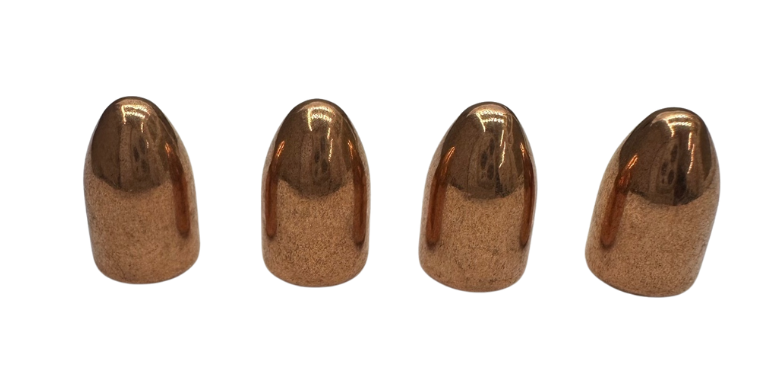
A loaded 9mm Luger round is a small lesson in metallurgy. The case is cartridge brass, roughly 70 percent copper and 30 percent zinc, chosen because it is strong yet springy. The bullet is usually a lead alloy core in a copper based jacket, and the primer is a tiny metal cup of impact sensitive compound. The 9mm Luger uses a .355 inch bullet, a small pistol primer, and a tapered, rimless, straight wall case.
Reloading rewards anyone who understands what the parts are made of and why. Here is what the 9mm Luger is actually made of and why those metals were chosen.
Why brass for the case
Cartridge brass is prized because it expands to seal the chamber when the round fires, then springs back so the case can be removed and reused. It resists corrosion and takes the repeated working of reloading better than most metals. That is why your brass is the reusable heart of the cartridge and the reason reloading pays off.
The science of work hardening
Every firing and resizing moves the brass grains and makes the metal a little harder and more brittle, which is called work hardening. It is why a case eventually splits at the neck or mouth and has to be retired. Bottleneck rifle brass can be annealed at the neck to reset this, while straight wall pistol brass is usually just inspected and replaced when it tires.
Bullets and primers
Most 9mm Luger bullets are a lead alloy core, hardened with a little antimony, wrapped in a gilding metal jacket of about 95 percent copper and 5 percent zinc, or cast from a lead tin antimony alloy for plain lead bullets. The small pistol primer is a small cup holding a shock sensitive compound that sprays flame through the flash hole to light the powder. Boxer primers, the standard on our brass, have a single central flash hole, which is what makes the case reloadable.
How the metallurgy guides your reloading
Understanding the metals tells you how to treat them. Because the tapered, rimless, straight wall case work hardens, you size it only as much as it needs and you inspect the mouth and base for cracks before every load. Because the jacket and core can separate if driven too hard, you match bullet construction to the job rather than chasing the highest velocity. Because the small pistol primer is impact sensitive, you seat it gently and store it away from heat and solvents. None of this is complicated once you see the science behind it.
Choosing brass and bullets for the 9mm Luger
For the 9mm Luger, start with quality once fired brass that has been sorted and cleaned so you are not loading damaged or mixed cases. Pick a .355 inch bullet whose weight and shape fit your goal, lighter for speed and target work, heavier and tougher for game or defense. The better your components going in, the more consistent your finished rounds come out, and consistency is what the metallurgy is really there to give you.
Reload it yourself
We carry the brass, bullets and dies for the 9mm Luger so you can build your own. See the full lineup on our 9mm Luger reloading guide and shop 9mm Luger components.
So what is a 9mm Luger made of?
Springy cartridge brass, a lead cored copper jacketed bullet, a measured charge of powder, and a small pistol primer. Understand those four metals and you understand why the round works and how to load it well.
Frequently asked questions
What is 9mm Luger brass made of?
Cartridge brass, about 70 percent copper and 30 percent zinc, chosen for strength and springback.
Why does brass wear out?
Repeated firing and sizing work hardens the metal until it becomes brittle and cracks.
What bullet diameter does the 9mm Luger use?
About .355 inch.
What primer size does the 9mm Luger take?
A small pistol primer, Boxer type for reloading.
Can I anneal my brass?
Neck annealing helps bottleneck rifle brass last longer. Straight wall pistol brass is usually just inspected and retired when worn.