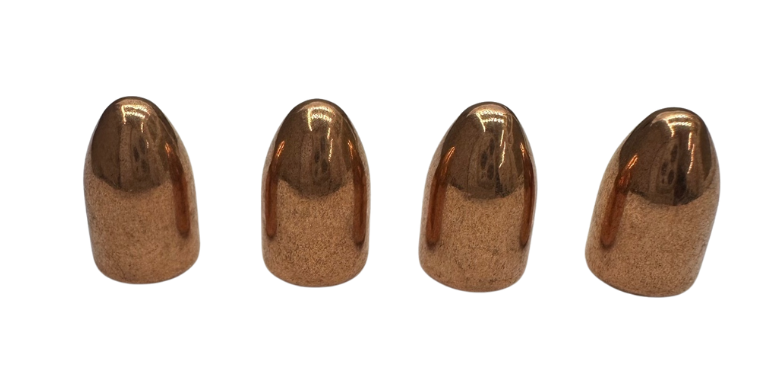
Unleash Your Inner Range Main Character with 10mm and Large Primers
The 10mm Magnum: A Deeper Dive for the Serious Handgun Enthusiast
The 10mm Automatic cartridge, often shortened to 10mm, represents a distinct segment of the handgun ammunition market. It occupies a space between common service calibers and dedicated magnum hunting rounds, offering significant ballistic capabilities that appeal to a specific user base. This article explores the characteristics and applications of the 10mm cartridge, with a particular focus on its compatibility with large rifle primers, a factor that influences its reloading and performance.
Every main character needs a reliable sidekick, and we have the 10mm large-primer brass you need to keep your press running. Gear up with us today at nereloading.com or give us a call at 973-931-1399.
Origins and Development of the 10mm
The 10mm cartridge was developed in the early 1980s by Jeff Cooper, a prominent figure in firearms instruction and the founder of the American Pistol Institute (API). Cooper, a proponent of a powerful handgun for self-defense and hunting, sought a cartridge that offered superior energy and penetration compared to existing service calibers like the 9mm Parabellum and .45 ACP. His vision was for a handgun round that could effectively neutralize threats at longer ranges and also possess the power for medium-sized game.
The “Bren Ten” and Early Adoption
The initial commercial production of the 10mm cartridge was closely tied to the introduction of the Bren Ten pistol, manufactured by Dornaus & Dixon Enterprises. The Bren Ten, designed by Cooper and others, was intended to be the flagship firearm for his envisioned cartridge. While the Bren Ten was innovative and garnered significant interest, its production was short-lived due to financial difficulties faced by Dornaus & Dixon. Despite the pistol’s limited success, the 10mm cartridge had been established and began to find other platforms.
Evolution and Modern Offerings
Following the demise of the Bren Ten, other firearm manufacturers began to chamber pistols and revolvers in 10mm. Notable examples include Colt, Smith & Wesson, and later, Glock. The cartridge’s popularity saw fluctuations, with periods of increased interest driven by specific firearms or perceived needs in self-defense scenarios. Today, the 10mm remains a specialized but well-supported caliber, available from numerous handgun manufacturers and ammunition companies.
Ballistic Characteristics of the 10mm
The 10mm cartridge is characterized by its relatively large case capacity and the suitability of heavy projectile weights. These factors contribute to its distinct ballistic performance.
Case Dimensions and Powder Capacity
The 10mm is built on a rimless, straight-walled case measuring approximately 25.4 mm (1 inch) in length. This case design allows for a substantial volume of gunpowder, a key ingredient in generating high velocities and energy. Compared to common handgun cartridges like the 9mm (21 mm case length) and .45 ACP (23 mm case length), the 10mm provides a greater margin for propellant. This increased capacity is a primary driver of its performance advantages.
Projectile Weights and Types
A wide range of projectile weights are available for the 10mm cartridge, typically ranging from 135-grain (8.7 grams) JHP (Jacketed Hollow Point) to 220-grain (14.3 grams) cast lead or jacketed bullets. This versatility allows users to tailor ammunition selection to specific applications, from self-defense to hunting. Heavier bullets, when propelled at significant velocities, deliver greater momentum and penetration.
Velocity, Energy, and Momentum
The muzzle velocity of 10mm loads typically falls between 1,200 and 1,400 feet per second (365 to 427 meters per second) for common bullet weights in full-power loadings. This translates to considerable muzzle energy, often exceeding 500 foot-pounds (678 joules) and approaching levels seen in some .357 Magnum loads. Momentum, another critical factor in projectile performance, is also a strong suit of the 10mm, particularly with heavier bullets. This is because momentum is a product of mass and velocity (p = mv), and the 10mm offers both significant mass and considerable velocity.
The Role of Large Primers in 10mm Ammunition
A significant aspect of understanding 10mm ammunition, especially for reloaders, is the use of large primers. This choice has a direct impact on case design and propellant ignition.
Primer Types: Small vs. Large Pistol Primers
Cartridge primers come in two primary sizes: small and large. They are essentially small explosive devices that initiate the propellant charge within the cartridge case. Large pistol primers have a diameter of 0.210 inches (5.33 mm), while small pistol primers measure 0.175 inches (4.45 mm).
Historical Context and 10mm Evolution
Early iterations of cartridges designed for high-pressure loadings often utilized large pistol primers due to their perceived robustness. As the 10mm cartridge was developed, and with its significant propellant charges, the design specifications called for large pistol primers. This specification ensured a sufficient ignition surface area and a primer component that could withstand the higher pressures generated.
Reloading Considerations and Pressure Limits
For handloaders, the use of large primers is a fundamental component of 10mm cartridge construction. It dictates the type of primer pockets in cartridge cases and the selection of primers during the reloading process. Adhering to manufacturer-recommended primer types is critical for safety and consistent performance. Exceeding pressure limits, regardless of primer type, can lead to catastrophic firearm failure.
Applications of the 10mm Magnum
The inherent power and versatility of the 10mm cartridge lend themselves to a variety of specialized applications, often for users who require more than what standard service calibers offer.
Self-Defense: A Robust Option
In the realm of personal defense, the 10mm is considered a potent option. Its combination of heavy bullet weight and high velocity translates to significant stopping power and penetration. For individuals who carry firearms in areas with moderate to significant threats, or who prioritize maximum terminal ballistics, the 10mm can be a compelling choice. It is important to note that with increased power comes increased recoil, which may be a deterrent for some shooters.
Hunting and Dangerous Game
The 10mm cartridge has found a niche in handgun hunting, particularly for medium-sized game. The energy and penetration capabilities allow it to be effectively used for whitetail deer, wild boar, and similar animals at appropriate ranges. For larger or more dangerous game, its efficacy is still debated, with many preferring larger caliber handguns or rifle calibers. However, properly placed shots with premium 10mm ammunition can certainly be effective for certain hunting scenarios.
Law Enforcement and Military Interest
While the 10mm never achieved widespread adoption by major law enforcement agencies, it has seen intermittent interest. Its power has been attractive to certain specialized units or for specific roles where increased penetration through barriers or enhanced stopping power is deemed necessary. However, the logistical considerations of carrying and issuing ammunition with higher recoil, coupled with the capabilities of modern high-performance 9mm rounds, have often favored other calibers for general duty.
Reloading the 10mm: Precision and Safety
Reloading the 10mm cartridge offers an avenue for significant cost savings and the ability to customize ammunition for specific performance requirements. However, it demands meticulous attention to detail and a strong adherence to safety protocols.
Components and Equipment
Reloading the 10mm requires standard reloading equipment, including a press, dies, shell holders, powder measure, scale, and primer seating tool. Specific to the 10mm, one must procure appropriate large pistol primers, suitable cartridge cases (new or once-fired), and projectiles. The choice between jacketed or cast lead projectiles will influence the reloading process and necessary components like case lubricants for cast bullets.
Case Preparation and Inspection
Before reloading, spent 10mm cases should be thoroughly inspected for any signs of damage, such as cracks, stretched case mouths, or corrosion. Cleaning and resizing the cases, including ensuring the primer pockets are clean and free of debris, are crucial steps. The case length should also be checked to ensure it falls within specified tolerances.
Reloading Data and Powder Selection
The heart of reloading lies in accurate powder selection and measurement. Reloading manuals, published by reputable ammunition component manufacturers, provide essential data for safe and effective loads. These manuals offer starting loads, maximum loads, and recommended powder types for specific bullet weights and velocities. It is imperative to consult multiple sources and to never exceed published maximum load data. Common powders used in the 10mm include Hodgdon’s CFE Pistol, Alliant’s Unique, and Vihtavuori powders, among others.
Primer Seating and Powder Charging
Careful primer seating is essential; primers should be seated flush or slightly below the case head, ensuring they do not protrude. Powder charging must be done with precision. Overcharging powder can lead to dangerously high pressures, while undercharging can result in a squib load, which can be equally hazardous. Using a calibrated powder scale is non-negotiable.
Bullet Seating and Crimp
Bullet seating depth affects chamber pressure and overall cartridge length, which can impact feeding reliability in semi-automatic firearms. Using a bullet seating die with an adjustable post allows for precise depth control. A slight crimp, applied with a separate crimp die or integrated into the seating die, may be necessary to secure the bullet in the case and prevent it from “walking” out under recoil, particularly in revolvers. This crimp should be sufficient to hold the bullet firmly but not so strong as to deform it.
Testing and Chronographing
Once reloaded ammunition is assembled, a process of testing and, ideally, chronographing is recommended. This involves firing a small batch of newly reloaded cartridges through the intended firearm and measuring their velocities. Chronographing allows the reloader to verify that their loads are performing as expected and to identify any anomalies.
Final Considerations for 10mm Enthusiasts
The 10mm cartridge, with its powerful performance and unique characteristics, continues to appeal to a dedicated segment of firearm owners. Understanding its history, ballistics, and the nuances of reloading is key to appreciating and utilizing this caliber effectively.
Understanding Recoil and Muzzle Blast
The energetic nature of the 10mm cartridge results in noticeably higher recoil and muzzle blast compared to more common handgun calibers. Shooters new to the 10mm should be prepared for this. Proper grip, stance, and shooting technique can help mitigate felt recoil, but it remains a significant consideration. This is akin to understanding the power of a freight train; it commands respect and requires control.
Firearm Compatibility and Maintenance
Not all firearms chambered in 10mm are built to handle the full-power loadings consistently. Older designs or less robustly constructed firearms may experience accelerated wear or potential damage when subjected to maximum pressure loads. It is advisable to research the specific firearm model and its intended use with 10mm ammunition. Regular inspection and maintenance of firearms chambered in 10mm are also crucial to ensure safe operation.
Ammunition Selection: Matching Load to Purpose
The choice of 10mm ammunition is paramount. For self-defense, expanding hollow-point bullets from reputable manufacturers designed for reliable expansion and penetration are recommended. For hunting, heavier, well-constructed bullets with good ballistic coefficients and penetration characteristics are generally preferred. Handloaded ammunition should be developed with a clear understanding of its intended purpose and tested thoroughly.
The 10mm as a Specialized Tool
Ultimately, the 10mm Magnum is not a ubiquitous caliber. It serves a purpose for those who require its specific capabilities, whether for hunting, self-defense in high-threat environments, or for the inherent challenge and satisfaction of mastering a powerful handgun cartridge. Its continued presence in the market indicates a sustained demand for its unique blend of power and ballistic efficiency.
Keep that main-character energy going strong by grabbing your 10mm brass and projectiles directly from us. Restock your bench at nereloading.com or dial 973-931-1399 to place your order.