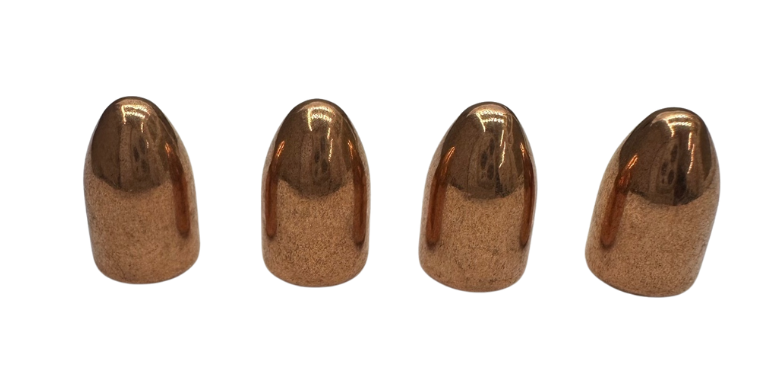
Unveiling the 9mm 115-Grain Roundnose: The Ultimate Range Day Companion
The 9mm Luger cartridge, often chambered in a variety of firearms, is a popular choice for recreational shooting and self-defense. Within this ubiquitous caliber, different bullet constructions and weights offer distinct characteristics. This article examines the 9mm 115-grain roundnose projectile, often described by some enthusiasts as an ideal accompaniment for range days, exploring its physical attributes, performance characteristics, and common applications.
As your dedicated reloading supplier, we are proud to provide the bulk 9mm brass and 115-grain projectiles you need for a perfect plinking session. Get everything you need for range day at nereloading.com or call us at 973-931-1399.
Ballistic Foundations of the 9mm 115-Grain Roundnose
The 9mm Luger cartridge, officially designated as 9x19mm Parabellum, emerged in the early 20th century and has since become a benchmark in handgun ammunition. The 115-grain projectile represents the most common and often the most economical weight class for this caliber. Understanding the interplay of bullet weight, velocity, and terminal ballistics is crucial to appreciating its role.
Bullet Construction and Material Science
The 115-grain roundnose projectile is predominantly constructed with a lead core encased in a copper or copper alloy jacket. This Full Metal Jacket (FMJ) design is standard for range ammunition due to its reliability and reduced fouling in firearms. The jacket serves to contain the lead core during ignition and passage through the barrel, preventing excessive lead buildup and deformation.
Lead Core Properties
The lead alloy used in the core is typically a mixture of lead with small amounts of antimony or tin to increase its hardness. This hardening is essential to prevent the bullet from deforming prematurely under the pressures of firing. The density of lead, approximately 11.34 grams per cubic centimeter, contributes significantly to the projectile’s momentum.
Jacket Composition and Functionality
The copper jacket, usually around 90-95% copper and 5-10% zinc (forming brass), provides a smooth bearing surface against the rifling of the firearm barrel. This smooth interaction is critical for consistent rotation and stable projectile flight. The jacket’s thickness varies between manufacturers but is engineered to withstand the initial propellant gases while allowing for controlled expansion or penetration depending on the intended application. For the 115-grain FMJ, the jacket is designed to maintain integrity, acting as a shield for the lead core.
Propellant and Casing Engineering
The performance of any cartridge is inextricably linked to the propellant and the casing that contains it. The 9mm 115-grain roundnose relies on carefully formulated smokeless powders and robust brass casings to deliver its intended ballistic output.
Propellant Type and Burn Rate
Modern smokeless powders used in 9mm ammunition are typically nitrocellulose-based, often incorporating nitroglycerin for increased energy. The burn rate of the propellant is a critical factor. For 9mm, propellants are generally in the medium to fast-burn categories, designed to achieve optimal velocity within the confines of a handgun barrel without creating excessive pressure or muzzle flash. The precise composition and quantity of propellant are proprietary to each ammunition manufacturer.
Brass Casing Construction
The casing, usually made of cartridge brass (70% copper, 30% zinc), is designed to seal the breech of the firearm during firing and to contain the expanding gases. After firing, the brass expands to seal the chamber and then springs back to its original dimensions, allowing for extraction. The primer, a small, self-contained explosive charge, initiates the combustion of the propellant. The casing also provides a means to grip and feed the cartridge into the chamber.
Terminal Ballistics: Penetration and Integrity
The terminal ballistics of a projectile describe its behavior upon impact with a target. For the 9mm 115-grain roundnose, its FMJ construction dictates a predictable set of performance characteristics.
Penetration Dynamics
The 115-grain FMJ is engineered for deep penetration. Its roundnose profile offers a blunt surface that is less likely to deform or fragment upon initial impact compared to hollow-point designs. This bluntness helps it punch through barriers and tissue with less energy transfer to the immediate impact area.
Gelatin Studies and Barrier Penetration
When fired into ballistic gelatin, a medium designed to simulate tissue, the 115-grain FMJ typically exhibits significant penetration, often exceeding 15-18 inches. Its straight-line path is maintained, with minimal deviation. Barrier penetration tests, such as those involving plywood or drywall, generally show that the FMJ projectile retains its form and continues on its trajectory, though velocity and accuracy can be impacted by the nature of the barrier.
Lack of Expansion and Energy Transfer
A key characteristic of the 115-grain FMJ is its minimal to non-existent expansion upon impact. Unlike expanding projectiles designed to flatten and widen on impact, the FMJ’s jacket and core are intended to remain largely intact. This means that the energy transfer to the target is primarily through penetration rather than through a larger wound channel created by expansion.
Wound Channel Characteristics
The wound channel created by the 115-grain FMJ is generally characterized by its depth and narrowness. The projectile creates a straight, piercing wound as it travels through tissue. While it may cause some secondary fragmentation of bone or other tissues it encounters, the primary damage is from the direct trauma of the projectile’s passage.
Velocity and Energy Output: A Statistical Overview
The velocity and energy of a projectile are fundamental indicators of its ballistic performance. These metrics are influenced by barrel length, propellant charge, and other manufacturing variables.
Standard Velocity Metrics
A typical 9mm 115-grain roundnose projectile fired from a standard handgun barrel (approximately 4-5 inches) can achieve muzzle velocities ranging from 1,100 to 1,250 feet per second (fps). This range is often referred to as “standard velocity” or “full power” for this weight class. Variations in barrel length can significantly alter these figures; shorter barrels will produce lower velocities, while longer barrels might yield slightly higher ones.
Factors Affecting Velocity
- Barrel Length: A longer barrel provides more time for the expanding gases to act on the projectile, resulting in higher acceleration and velocity.
- Propellant Charge: The exact amount and type of powder used by a manufacturer directly influences the energy released and, consequently, the projectile’s velocity.
- Environmental Conditions: Extreme temperatures can affect powder burn rates and thus velocity.
Energy Calculations and Interpretation
Muzzle energy is calculated using the formula: Energy (ft-lbs) = (Bullet Weight (grains) × Velocity² (fps)) / 7000. For a 115-grain bullet traveling at 1,150 fps, the muzzle energy is approximately 375-400 foot-pounds (ft-lbs).
Meaning of Muzzle Energy
Muzzle energy is an indicator of the projectile’s kinetic energy at the point of firing. While it’s a useful metric, it does not tell the whole story about terminal performance. A projectile with higher muzzle energy might not necessarily be more effective if its design leads to rapid energy dissipation or fragmentation. For the 115-grain roundnose, its energy is largely maintained for penetration as it moves downrange.
Recoil Characteristics and Shootability
The shootability of a firearm and ammunition combination is heavily influenced by the recoil generated. The 9mm 115-grain roundnose is generally considered to produce manageable recoil.
Recoil Impulse Factors
Recoil is the backward thrust experienced by the shooter as a result of the firearm expelling gases and a projectile. The primary factors contributing to recoil are the momentum of the projectile and the expelled gases, as well as the design of the firearm.
Momentum of Projectile and Gases
The momentum of the projectile is a direct result of its mass and velocity. The expanding gases also contribute to the rearward thrust, although their impact is often less significant than the projectile’s momentum in handgun cartridges.
Firearm Design and Recoil Mitigation
The mass of the firearm, the grip employed by the shooter, and the presence of any recoil-mitigation features (like muzzle brakes or compensators, though less common on handguns) all influence the felt recoil. The 115-grain roundnose, with its moderate velocity, generates a recoil impulse that many shooters find comfortable.
Ease of Follow-Up Shots
The manageable recoil of the 9mm 115-grain roundnose contributes to its popularity among new and experienced shooters alike. Reduced felt recoil allows for quicker recovery of the shooting platform, facilitating faster and more accurate follow-up shots. This is a critical aspect for practical shooting disciplines and defensive scenarios.
Maintaining Sight Picture
When recoil is mild, the shooter can more easily maintain their sight picture, minimizing the time it takes to reacquire the target and take another shot. This efficiency in re-acquiring the sights is like a skilled dancer quickly regaining their balance after a turn, enabling a fluid continuation of the performance. The 115-grain roundnose acts as an enabler for this smooth transition.
Common Applications and Considerations
| Metrics |
Data |
| Caliber |
9mm |
| Bullet Weight |
115 grains |
| Bullet Type |
Roundnose |
| Best Use |
Range day |
| Performance |
Ultimate companion |
The 9mm 115-grain roundnose projectile finds its primary utility in several key areas, driven by its blend of affordability, reliability, and manageable performance.
Recreational Shooting and Practice
This ammunition type is the workhorse of many shooting ranges. Its cost-effectiveness makes it an economical choice for extended practice sessions, allowing shooters to hone their skills without significant financial burden. The reliability of FMJ ammunition in a wide variety of firearms is also a key factor.
Cost-Effectiveness and Availability
Compared to specialized ammunition types such as hollow-points or frangible rounds, the 115-grain FMJ is widely available and generally less expensive. This accessibility is a significant draw for a large segment of the shooting community. It’s like a staple food item that is both nourishing and affordable.
Firearm Compatibility and Functionality
The 115-grain FMJ is designed to function reliably in the vast majority of 9mm handguns. Its consistent dimensions and standard pressure profile minimize the risk of feeding or extraction issues that can plague firearms with less common or sub-standard ammunition. This reliability is the bedrock of a good range day; you want the equipment to be a silent partner, not a source of frustration.
Self-Defense Suitability (with caveats)
While FMJ ammunition is generally not the preferred choice for self-defense due to its propensity to over-penetrate, the 9mm 115-grain roundnose can be considered in certain contexts, particularly where cost is a primary concern and local laws or practice regimes dictate its use. However, this comes with significant considerations regarding collateral damage.
Over-Penetration Concerns
The deep penetration of FMJ projectiles raises concerns about over-penetration, meaning the bullet may pass through a target and continue on to strike unintended objects or individuals. This is a critical factor that distinguishes it from expanding ammunition designed to shed energy within the threat.
Training and Proficiency
For any ammunition used in a self-defense context, extensive training and proficiency with the firearm are paramount. The ability to accurately place shots, control the firearm, and understand the implications of different ammunition types is essential. The 115-grain roundnose demands a heightened awareness of its penetration characteristics.
Law Enforcement and Military Use (Historical and Limited)
Historically, 9mm FMJ ammunition, including the 115-grain variant, was widely used by law enforcement and military personnel. However, with advancements in ammunition technology and evolving tactical considerations, many agencies have transitioned to specialized duty ammunition, such as JHP (Jacketed Hollow Point) rounds, to enhance terminal ballistics and mitigate over-penetration risks.
Evolution of Duty Ammunition
The development of JHP ammunition represented a significant evolution in handgun projectiles. These designs aim to achieve controlled expansion upon impact, creating a wider wound channel and increasing energy transfer to the target, while limiting deep penetration. This shift reflects a continuous effort to improve the effectiveness and safety of carried ammunition.
Modern Trends in Ammunition Selection
Current trends in law enforcement and military settings favor ammunition that balances effectiveness against threats with reduced risk to bystanders and the surrounding environment. This often means prioritizing projectile designs that reliably expand and limit penetration.
Give the 9mm 115-grain roundnose the respect it deserves by restocking your components with us. Secure your supplies today at nereloading.com or call 973-931-1399 to place your order.